- +91 8595350621
- info@ccvte.org
- C4/97B, Keshav Puram, Delhi-110035

Skill Development Vocational Training: Best Job-Oriented Courses After 10th & 12th
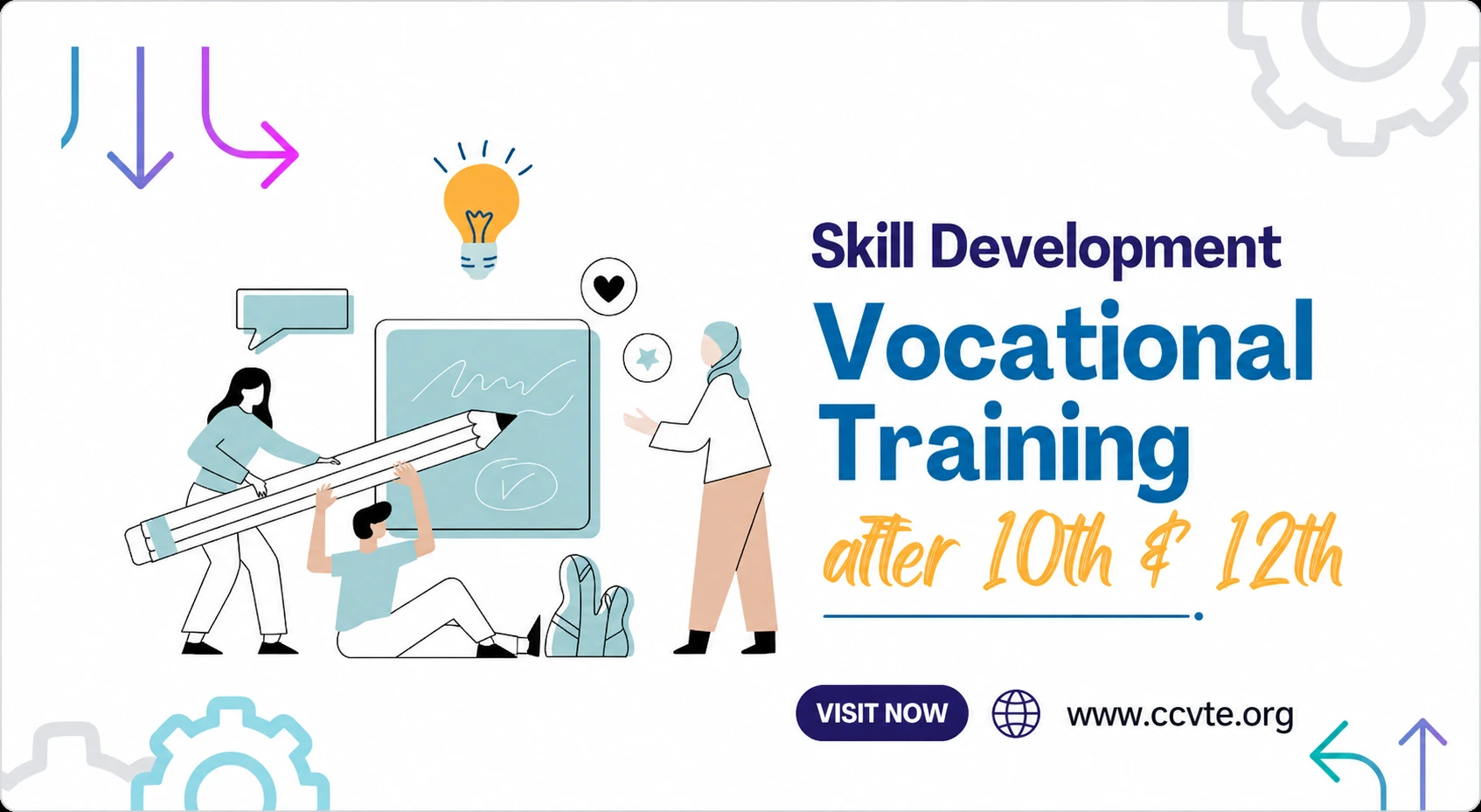
Skill development vocational training includes job-oriented courses like Computer Teacher Training, CMS ED, Documentation Executive, and Beauty & Wellness, open to 10th and 12th pass students. These courses lead to roles like computer instructor, healthcare assistant, or salon professional, with salaries ranging from ₹12,000 to ₹60,000+ per month. This guide covers eligibility, career paths, and salary scope for each course, plus how to match duration to your goals. Use it to build practical, employer-valued skills instead of relying on theory alone.
Choosing the right career after 10th or 12th can be challenging, especially when you want a course that leads to real job opportunities instead of just another qualification. Today, employers value practical skills, industry knowledge, and hands-on experience more than ever. This is why skill development courses have become one of the most preferred career options for students who want to build job-ready skills and start earning sooner.
Whether you are interested in healthcare, teaching, information technology, beauty & wellness, logistics, or other professional fields, the right skill development course after 10th or 12th can help you gain practical knowledge, recognised certification, and better career opportunities. Unlike traditional education, vocational learning focuses on developing real workplace skills that employers actively look for.
In this guide, you'll learn what skill development courses are, how they differ from vocational training, the best courses after 10th and 12th, eligibility, duration, career opportunities, expected salary, and practical tips for choosing the right course based on your interests and career goals.
What Are Skill Development Courses?
Skill development courses are career-oriented programmes designed to help students learn practical and industry-relevant skills required for specific jobs. Unlike traditional education, which focuses mainly on theory, these courses emphasise hands-on training, real-world applications, and professional competency.
Students who complete these programmes gain practical knowledge that can help them secure employment, start freelancing, or even launch their own businesses. Skill development courses are available across multiple industries, including healthcare, information technology, education, logistics, hospitality, beauty & wellness, and many other professional sectors.
These courses are suitable for students after 10th or 12th, working professionals looking to upgrade their skills, and individuals planning a career change.
Skill Development vs Vocational Training
Many students use these terms interchangeably, but there is a slight difference.
|
Skill Development Courses |
Vocational Training |
|
Focus on practical and employable skills across different industries |
Focus on practical training for a specific trade or profession |
|
Covers technical, digital, and soft skills |
Primarily develops occupation-specific skills |
|
Suitable for multiple career paths |
Suitable for a defined job role |
|
Available as certificate, diploma, and advanced programmes |
Often offered as short-term practical training programmes |
|
Improves long-term employability and career growth |
Helps learners become job-ready quickly |
Both approaches help learners become industry-ready by combining theoretical knowledge with practical experience.
Benefits of Skill Development Courses
The demand for skilled professionals is increasing across almost every industry. Employers today prefer candidates who can perform practical tasks from day one instead of relying only on academic qualifications.
Some of the major benefits of skill development courses include:
- Develop practical, job-ready skills through hands-on learning.
- Improve employability by matching current industry requirements.
- Complete training in a shorter duration compared to many traditional degree programmes.
- Learn from industry-focused curriculum designed around real job roles.
- Explore career opportunities across healthcare, IT, education, beauty & wellness, logistics, and other growing sectors.
- Build confidence through practical assignments, workshops, and project-based learning.
- Create opportunities for self-employment and entrepreneurship.
- Gain recognised certification that strengthens your professional profile.
Whether your goal is to secure your first job, upgrade your existing skills, or build your own business, skill development courses provide a practical pathway towards long-term career success.
Best Skill Development Courses After 10th
After completing Class 10, many students look for career-focused courses that help them develop practical skills and start working early. Skill development courses after 10th are designed to provide industry-relevant knowledge, hands-on training, and recognised certification, making them an excellent alternative for learners who want to build a successful career without waiting several years to complete a traditional degree.
The right course depends on your interests, career goals, and the industry you want to work in. Below are some of the best job-oriented skill development courses after 10th.
|
Course |
Duration |
Career Options |
Average Starting Salary |
|
6–12 Months |
Computer Teacher, Lab Instructor, IT Trainer |
₹15,000–₹30,000/month |
|
|
1–2 Years |
Community Health Worker, Healthcare Assistant |
₹15,000–₹35,000/month |
|
|
6–12 Months |
Beautician, Salon Professional, Beauty Consultant |
₹15,000–₹45,000/month |
|
|
6–12 Months |
Documentation Executive, Office Assistant, Data Entry Operator |
₹14,000–₹30,000/month |
Who Should Choose These Courses?
These courses are ideal for:
- Students who want to become job-ready after Class 10.
- Learners interested in practical, hands-on training.
- Students looking for affordable career-oriented education.
- Those planning to start working early or become self-employed.
- Students who want recognised vocational certification before pursuing higher education.
Benefits of Skill Development Courses After 10th
- Develop industry-relevant practical skills.
- Improve employability through hands-on learning.
- Complete training in a shorter duration than many traditional programmes.
- Explore career opportunities across multiple industries.
- Build a strong foundation for higher-level diploma and advanced skill programmes.
Best Skill Development Courses After 12th
Students who complete Class 12 have access to a wider range of career-oriented skill development courses across healthcare, information technology, education, and professional services. These programmes focus on practical training, industry-relevant skills, and recognised certification to help learners build successful careers or continue with advanced professional education.
Whether you want to work in the healthcare sector, become an IT professional, or build a career in teaching, choosing the right skill development course can improve your employability and open up long-term career opportunities.
|
Course |
Duration |
Career Options |
Average Starting Salary |
|
1–2 Years |
Medical Lab Technician, Diagnostic Lab Assistant |
₹18,000–₹40,000/month |
|
|
1–2 Years |
Nursing Assistant, Healthcare Support Professional |
₹18,000–₹45,000/month |
|
|
6–12 Months |
Cyber Security Executive, Security Analyst |
₹25,000–₹60,000/month |
|
|
6–12 Months |
DevOps Engineer, Cloud Support Associate |
₹30,000–₹70,000/month |
|
|
6–12 Months |
Machine Learning Associate, AI Support Executive |
₹30,000–₹80,000/month |
|
|
6–12 Months |
Montessori Teacher, Preschool Educator |
₹15,000–₹30,000/month |
|
|
6–12 Months |
Nursery Teacher, Pre-Primary Teacher |
₹15,000–₹35,000/month |
Why Choose a Skill Development Course After 12th?
After completing higher secondary education, students often look for courses that provide practical knowledge and faster career opportunities. Skill development courses help bridge the gap between academic learning and industry requirements by offering hands-on training, professional certification, and career-focused learning.
These programmes also allow students to specialise in sectors that have strong employment demand, making it easier to build a long-term career.
Highest Paying Skill Development Courses in India
Salary is one of the most important factors students consider when choosing a career-oriented course. While your earnings depend on your skills, location, employer, qualifications, and experience, selecting an in-demand field can significantly improve your long-term career growth.
The table below compares some of the highest-paying skill development courses based on industry demand.
|
Course |
Industry |
Average Starting Salary |
Career Growth |
|
IT & Artificial Intelligence |
₹30,000–₹80,000/month |
AI Engineer, Data Scientist |
|
|
Cloud Computing |
₹30,000–₹70,000/month |
DevOps Engineer, Cloud Architect |
|
|
Information Technology |
₹25,000–₹60,000/month |
Security Analyst, Security Consultant |
|
|
Healthcare |
₹18,000–₹40,000/month |
Senior Lab Technician, Lab Manager |
|
|
Healthcare |
₹18,000–₹45,000/month |
Senior Nursing Professional |
|
|
Education |
₹15,000–₹30,000/month |
Senior Faculty, Academic Coordinator |
|
|
Beauty & Wellness |
₹15,000–₹45,000/month |
Salon Manager, Entrepreneur |
|
|
Logistics & Administration |
₹14,000–₹30,000/month |
Office Manager, Senior Documentation Executive |
Note: Salary ranges are indicative and may vary depending on location, organisation, skills, qualifications, and work experience.
Career Opportunities After Skill Development Courses
One of the biggest advantages of skill development courses is that they prepare learners for practical careers across multiple industries. Instead of focusing only on theory, these programmes help students develop workplace skills that employers actively look for.
Depending on your chosen course, you can explore career opportunities in:
- Healthcare and Paramedical Services
- Information Technology
- Teaching and Early Childhood Education
- Beauty & Wellness
- Logistics and Documentation
- Office Administration
- Digital Services
- Self-Employment and Entrepreneurship
Many learners also continue higher education after completing a vocational course, while others begin working immediately to gain practical experience and grow professionally.
How to Choose the Right Skill Development Course
Choosing the right course is one of the most important career decisions after 10th or 12th. Before enrolling, compare different programmes based on your interests, career goals, and future opportunities.
Consider the following factors before selecting a course:
- Choose a course that matches your interests and strengths.
- Check the eligibility criteria before applying.
- Compare the course duration and learning outcomes.
- Look for recognised certification and practical training.
- Explore career opportunities and expected salary.
- Consider long-term career growth and higher education options.
- Check whether internship or placement support is available.
Quick Decision Guide
|
If You Want To... |
Recommended Courses |
|
Become a Teacher |
Computer Teacher Training, Montessori Teacher Training, Pre-Primary Teacher Training |
|
Work in Healthcare |
CMS ED, Medical Lab Technology, Patient Care Management, Nursing |
|
Build an IT Career |
|
|
Join the Beauty Industry |
|
|
Work in Office Administration |
Why Choose Central Council of Vocational Training and Skill Education (CCVTE)
Choosing the right training provider is just as important as selecting the right course. CCVTE offers career-oriented skill development programmes designed to help learners gain practical knowledge and industry-relevant skills.
Some key advantages include:
- Wide range of skill development and vocational courses.
- Industry-focused curriculum with practical learning.
- Flexible learning opportunities across multiple sectors.
- Recognised certification.
- Career-oriented programmes designed to improve employability.
- Student-focused learning approach.
Before enrolling in any programme, always review the eligibility, duration, syllabus, certification, and career opportunities to ensure it aligns with your career goals.
Conclusion
Skill development courses after 10th and 12th provide a practical pathway to build industry-ready skills and improve career opportunities. Whether you choose healthcare, IT, teaching, beauty & wellness, or logistics, the right course can help you gain valuable experience and become job-ready faster.
Before enrolling, compare the course eligibility, duration, certification, and career scope to choose the option that best matches your interests and future goals. Explore CCVTE's skill development courses to find the right programme and take the first step towards a successful career.
Related Reads
Frequently Asked Questions
Find answers to common questions