- +91 8595350621
- info@ccvte.org
- C4/97B, Keshav Puram, Delhi-110035

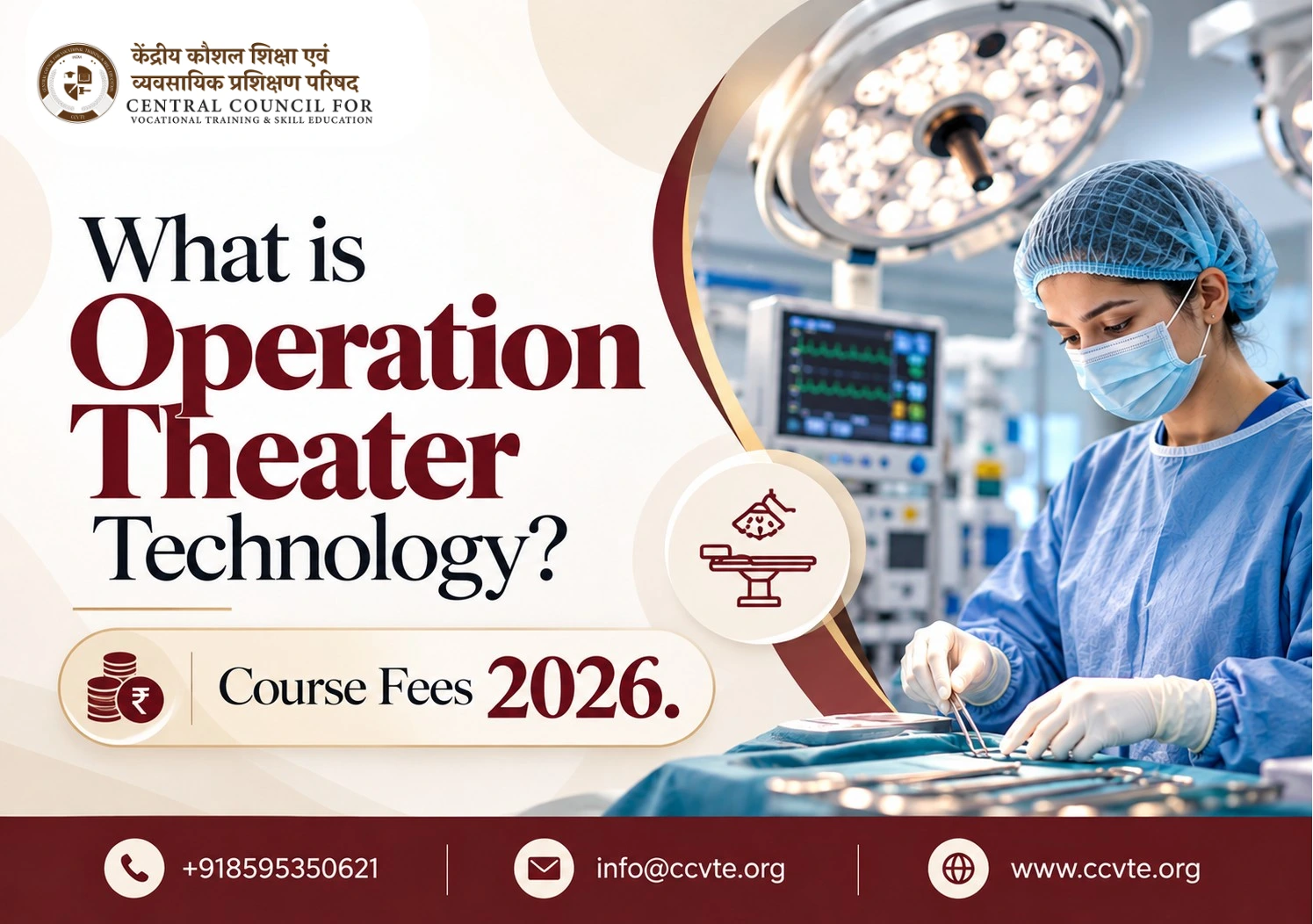
What is Operation Theatre Technology? Course Fees 2026
Learn what organic farming is, its benefits, sustainable practices, course eligibility, syllabus, and career opportunities in agriculture and eco-friendly farming.
An OT course (Operation Theatre Technology) is a paramedical programme that trains you to assist surgeons and anesthetists during surgery. The OT course full form is Operation Theatre Technology. It is offered as a certificate, diploma or B.Sc after Class 12 (PCB preferred). OT course fees in 2026 range from about ₹10,000 to ₹4,00,000 depending on the level and college.If you have ever watched a hospital drama and wondered who actually sets up the room, hands over the instruments and keeps everything sterile, that is the OT technician. This guide walks you through the whole OT course in plain language: what it is, who can join, what you will study, what it costs, how much you can earn, and whether it is the right call for you. You will also find a short OT course details in Hindi section for readers who prefer it.
OT Course at a Glance
|
|
|
|
|
|
|
|
|
|
|
|
|
|
|
|
|
|
|
|
|
|
|
|
|
|
|
What is Operation Theatre Technology?
Operation Theatre Technology is a healthcare and paramedical field focused on everything that happens in and around an operating room. An OT technologist prepares the theatre before surgery, keeps it sterile, arranges and counts surgical instruments, helps the anesthesia team, supports the surgeon during the procedure, and makes sure the patient is safely shifted after it.Think of it this way. The surgeon is the pilot, but the OT technician is the ground crew, the co-pilot support and the safety checklist rolled into one. Without them, no operation starts on time and none ends safely.That is why hospitals across India keep hiring for this role, and why the OT course has become one of the more practical paramedical choices after Class 12.
OT Course Full Form
The OT course full form is Operation Theatre Technology. You may also see it written as OTT, Operation Theatre Technician course, or Operating Room Technology in some countries. The shortened word "OT" simply stands for Operation Theatre, which is the room where surgeries are performed.
OT = Operation Theatre. OT course = Operation Theatre Technology course, a paramedical programme for surgical support staff.
OT Course Details in Hindi (ओटी कोर्स की जानकारी)
ओटी कोर्स क्या है? ओटी कोर्स का पूरा नाम Operation Theatre Technology है। यह एक पैरामेडिकल कोर्स है, जिसमें छात्रों को ऑपरेशन थिएटर में सर्जरी के दौरान सर्जन, एनेस्थेटिस्ट और नर्सिंग टीम की मदद करना सिखाया जाता है।
ओटी कोर्स में क्या पढ़ाया जाता है? इसमें मानव शरीर रचना (Anatomy), शरीर क्रिया विज्ञान (Physiology), स्टरलाइज़ेशन, सर्जिकल उपकरणों की पहचान, एनेस्थीसिया की बुनियादी जानकारी, संक्रमण नियंत्रण और मरीज की सुरक्षा जैसे विषय शामिल होते हैं।
|
|
|
|
|
|
|
|
|
|
|
|
|
|
|
|
|
|
क्या ओटी कोर्स करने के बाद नौकरी मिलती है? जी हाँ। अस्पतालों की संख्या बढ़ने से ओटी टेक्नीशियन की मांग लगातार बनी हुई है। अनुभव के साथ आप सीनियर टेक्नीशियन, OT इंचार्ज या ट्रेनर भी बन सकते हैं।
Types of OT Courses in India
Not everyone has the same time or budget, so the OT course comes in four levels. Here is how they compare.
|
|
|
|
|
|
|
|
|
|
|
|
|
|
|
|
|
|
|
|
|
|
|
|
|
If you want the fastest route to a job, a diploma works well. If you want better pay, senior roles and the option to study abroad or teach later, the B.Sc is the stronger long-term pick.
OT Course Eligibility Criteria
• Certificate: Class 10 or Class 12 pass from a recognised board. Some institutes also ask for a basic medical fitness check.
• Diploma: Class 12 pass, ideally with Physics, Chemistry and Biology.
• B.Sc: Class 12 with PCB (some colleges also accept PCM), with a minimum aggregate that is usually around 45 to 50%. Reserved categories often get relaxation.
• M.Sc: A B.Sc in Operation Theatre Technology or a related allied health science degree.
• Age: Most institutes expect candidates to be at least 17 years old at the time of admission.
OT Course Fees in 2026
This is the question most people search first, so let us be straightforward. OT course fees depend on three things: the level of the course, whether the college is government or private, and the city.
|
|
|
|
|
|
|
|
|
|
|
|
What affects OT course fees?
• Government vs private status of the institute
• Hospital attachment and quality of practical training
• City and infrastructure (metro colleges usually charge more)
• Hostel, lab, exam and uniform charges, which are sometimes billed separately
• Scholarships and fee concessions for merit, category or state-specific schemes
Before paying, ask for a written fee structure that includes every extra charge. A low headline fee can balloon once lab, internship and exam fees are added.
Admission Process for the OT Course
Most OT programmes follow one of two routes.
1. Merit-based admission: Your Class 12 marks decide your seat. This is common in private colleges and many diploma programmes.
2. Entrance-based admission: Some universities and state councils hold their own entrance tests or counselling rounds for paramedical courses.
The usual steps are: shortlist colleges, check eligibility, fill the online or offline form, upload documents (mark sheets, ID, photographs, category certificate), appear for the entrance test or interview if required, and pay the fee after your seat is confirmed.
OT Course Syllabus: What Will You Study?
The syllabus mixes classroom theory with a lot of hands-on training inside real operation theatres. Here are the core subjects you can expect.
|
|
|
|
|
|
|
|
|
|
|
|
|
|
|
|
|
|
|
|
|
|
|
|
|
|
|
Skills You Need to Succeed as an OT Technician
• Calm under pressure: Emergency surgeries do not wait for you to feel ready.
• Attention to detail: A missed swab or instrument count can be serious.
• Physical stamina: Long hours on your feet are normal.
• Teamwork and communication: You work with surgeons, nurses and anesthetists every day.
• Respect for hygiene: Sterile discipline is non-negotiable.
• Technical comfort: Modern theatres use laparoscopic, robotic and monitoring equipment.
What Does an OT Technician Actually Do?
A typical day starts before the first patient arrives. You check that the theatre is clean and sterile, test equipment such as the suction machine, cautery unit and monitors, and lay out the instrument trays for the scheduled surgeries.During surgery, you pass instruments, assist with positioning, support the anesthesia team and keep a close eye on supplies. Afterwards you help shift the patient to recovery, send used instruments for sterilisation, clean the theatre and get it ready for the next case. On busy days, that cycle repeats several times.
Career Scope After an OT Course
The healthcare sector in India is expanding steadily, with more private hospital chains, day-care surgery centres and government health programmes opening every year. Every one of them needs trained theatre staff, which is why the career scope of the OT course remains strong.
Job roles you can apply for
• Operation Theatre Technician
• Surgical Technologist / Surgical Assistant
• Anesthesia Technician
• CSSD (Central Sterile Supply Department) Technician
• OT Supervisor or OT In-charge (with experience)
• Clinical Instructor or Trainer in paramedical institutes
Where can you work?
Government hospitals, corporate and private hospitals, nursing homes, trauma and emergency centres, day-care surgery clinics, dental and eye surgery centres, and medical device companies. Many graduates also look at healthcare jobs in the Gulf countries and other overseas markets, where requirements for registration and licensing differ by country.
How to Choose the Right OT Course College
OT technician salary in India
|
|
|
|
|
|
|
|
|
|
|
|
Salaries vary by city, hospital size, shift allowances and whether the job is government or private. Government posts usually add job security and benefits, while corporate hospitals often pay more upfront.
Higher Studies After the OT Course
• M.Sc in Operation Theatre Technology or a related allied health science
• Post-graduate diploma in anesthesia or critical care technology
• Hospital administration or healthcare management programmes
• Teaching and training roles after an M.Sc
Pros and Cons of Doing an OT Course
Pros
• Short duration compared with medical degrees
• Lower cost than MBBS or BDS
• Steady demand in hospitals
• Hands-on, practical learning from the first year
• Pathway to growth into supervisory or teaching roles
Cons
• Long and irregular shifts, including nights and emergencies
• Physically and mentally demanding work
• Starting pay can be modest at smaller hospitals
• Exposure to infection risk, so strict protocols are essential
3. Check recognition: The college should be affiliated with a recognised university, state paramedical council or relevant health authority.
4. Look for a hospital tie-up: Real operation theatre exposure matters more than a glossy brochure.
5. Ask about internships and placements: Find out where past students actually work.
6. Visit the labs: Check whether the simulation and sterilisation labs are well equipped.
7. Compare the full cost: Add up tuition, hostel, exam, lab and internship charges.
8. Talk to current students: They will tell you what the prospectus will not.
Is the OT Course Right for You?
Choose it if you like hands-on work, can stay composed when things get intense, and want a healthcare career without spending five or six years in medical school. Think twice if the sight of blood makes you very uncomfortable or if you strongly prefer a fixed 9-to-5 routine. A short visit to a hospital or a chat with a working OT technician can help you decide with real information.
Final Thoughts
The OT course is a practical, job-oriented route into healthcare. You learn a skill that hospitals genuinely need, you start working earlier than most medical graduates, and you can keep growing through a B.Sc, M.Sc or supervisory roles.If you are weighing your options after Class 12, shortlist two or three recognised colleges, compare the real fees and clinical exposure, and speak to someone already working in an OT. That one conversation often answers more than a dozen articles.

Frequently Asked Questions
Find answers to common questions