- +91 8595350621
- info@ccvte.org
- C4/97B, Keshav Puram, Delhi-110035

Vocational Training Near Me: Complete Guide to Government Skill Development Courses in India (2026)
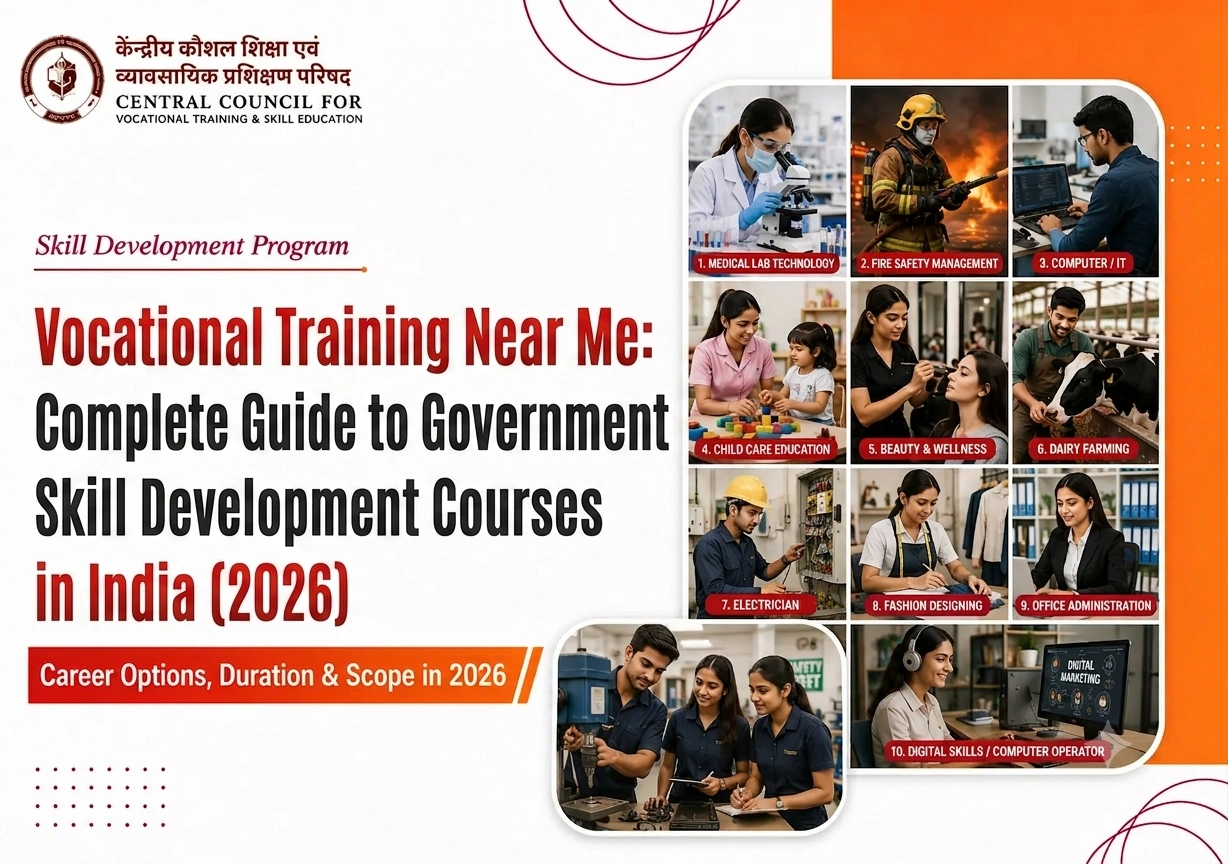
Vocational training near you means government and private skill courses in fields like healthcare, beauty, computer applications, and teacher training, run through Skill India, PMKVY, and NSDC-linked institutes. These courses turn you into a job-ready professional in three months to two years, often faster than a traditional degree. This guide explains eligibility, fees, course duration, and how to pick a reliable institute near your city. Use it to find quality, government-recognized training instead of choosing a course only by price.
Vocational training near you refers to skill-based education offered by government and private institutes that prepares students for specific careers. These practical courses help learners develop industry-ready skills in less time, making it easier to find employment or start their own business.
What Is Vocational Training?
Vocational training is a type of education that teaches practical skills required for a particular profession or industry. Instead of focusing mainly on theory, vocational courses provide hands-on training that helps students become job-ready in a shorter period.
Today, employers prefer candidates who already possess practical skills. Vocational education bridges the gap between classroom learning and workplace requirements by providing industry-focused training.
Whether you have completed Class 10, Class 12, graduation, or simply wish to learn a new skill, vocational training can help you build a successful career.
Why Is Vocational Training Becoming Popular in India?
India's industries are growing rapidly, and businesses require skilled professionals more than ever before. Companies in healthcare, IT, education, beauty, retail, hospitality, and electronics are continuously hiring trained professionals.
Traditional education often takes three to four years before students enter the workforce. In contrast, vocational courses allow students to gain employable skills within a few months.
Government initiatives such as Skill India have also increased awareness about vocational education by making quality training more accessible across the country.
Read More : Medical Imaging Technology
Why Is Vocational Training Important?
Imagine two students completing school together.
The first student enrolls in a traditional degree program and spends several years studying theoretical subjects.
The second student joins a vocational training course. Within months, they learn practical skills, complete training, gain industry exposure, and start working.
Both educational paths have value, but vocational education is designed for students who want practical knowledge and faster employment opportunities.
Vocational training helps students:
- Learn practical industry skills
- Improve confidence
- Become job-ready quickly
- Increase employment opportunities
- Start self-employment or small businesses
- Develop professional work ethics
This practical approach makes vocational education one of the fastest-growing education sectors in India.
Top Benefits of Vocational Training
1. Practical Learning
Students spend more time learning practical skills rather than memorising theory. This improves confidence and workplace performance.
2. Faster Employment
Many vocational courses can be completed within a few months. Students become eligible for entry-level jobs much earlier than many traditional degree programs.
3. Affordable Education
Compared with many professional degree programs, vocational training is generally more affordable. Many government-supported skill development programs also provide subsidized or free training for eligible candidates.
4. Industry-Oriented Curriculum
Vocational institutes regularly update their curriculum according to current industry requirements. Students learn modern tools, equipment, and professional practices used by employers.
5. Entrepreneurial Opportunities
Vocational skills are valuable not only for jobs but also for starting a business. Many beauticians, computer professionals, healthcare assistants, electricians, and trainers successfully establish their own businesses after completing vocational training.
Government-Sponsored Vocational Training in India
The Government of India actively promotes skill development through various initiatives that aim to improve employability among young people.
These programs help students develop practical skills that meet industry standards while supporting India's growing workforce.
Some well-known initiatives include:
- Skill India Mission
- Pradhan Mantri Kaushal Vikas Yojana (PMKVY)
- National Skill Development Corporation (NSDC)
- State Skill Development Missions
- Apprenticeship programmes
IMPORTANT: Depending on eligibility and location, some government-supported training programs may provide financial assistance, training support, or certification. Students should always verify program details through the official government websites or recognized training providers before enrolling.
How to Find Vocational Training Near You
Finding a reliable vocational training institute is easier than ever. You can begin by following these simple steps:
Step 1: Decide Your Career Goal
Choose a field based on your interests. Examples include:
- Healthcare
- Computer Applications
- Teacher Training
- Beauty & Wellness
- Electronics
- Hospitality
- Digital Marketing
- Office Administration
Step 2: Search for Government-Recognised Institutes
Look for institutes that clearly mention:
- Government recognition
- Industry-relevant curriculum
- Practical training
- Experienced trainers
- Student support
- Transparent admission process
PRO TIP: Avoid choosing an institute only because it offers the lowest fee. The quality of training matters far more than the price.
Step 3: Compare Course Details
Before enrolling, compare:
- Course duration
- Practical sessions
- Certification
- Faculty experience
- Student reviews
- Placement support
- Learning facilities
Choosing the right institute can significantly improve your learning experience and future career opportunities.
Most Popular Vocational Training Courses in India
Vocational education covers a wide range of industries, allowing students to choose a course that matches their interests and career goals. Whether you want to work in healthcare, education, technology, or business, there is a vocational program designed to help you build practical skills.
Below are some of the most popular vocational training fields in India.
| Industry | Popular Career Options |
|---|---|
| Healthcare | Patient Care Assistant, Operation Theatre Technician, Medical Lab Assistant |
| Teacher Training | Montessori Teacher, Pre-Primary Teacher, Nursery Teacher |
| Computer & IT | Computer Operator, Data Entry, Digital Marketing, Office Executive |
| Beauty & Wellness | Beautician, Hair Stylist, Makeup Artist, Spa Therapist |
| Electronics | Electrician, CCTV Technician, Mobile Repair Technician |
| Hospitality | Hotel Staff, Front Office Executive, Housekeeping Assistant |
| Fashion Designing | Boutique Owner, Fashion Designer, Tailor |
| Office Administration | Documentation Executive, Office Assistant, Receptionist |
These career-oriented courses focus on practical learning and industry exposure, helping students become job-ready in a shorter period.
Who Can Join Vocational Training?
One of the biggest advantages of vocational education is that it is suitable for learners from different educational backgrounds. You may be eligible if you are:
- A student after Class 10
- A student after Class 12
- A graduate looking for practical skills
- A homemaker planning to restart a career
- A working professional wanting to upgrade skills
- A job seeker looking for faster employment
- Someone interested in starting a small business
Eligibility varies depending on the course and institute, so always check the admission requirements before applying.
Course Duration
Vocational training programs are available in different durations based on the skill level and course objectives.
| Course Level | Typical Duration |
|---|---|
| Certificate Course | 3–6 Months |
| Advanced Certificate | 6–12 Months |
| Diploma | 1 Year |
| Advanced Diploma | 2 Years |
Short-term courses are ideal for students who want to start working quickly, while longer programmes provide more detailed practical training.
Course Fees
The fee structure depends on the institute, course type, training facilities, and duration.
Government-supported programs may offer subsidized or free training for eligible candidates, while private institutes generally charge tuition fees based on the course.
PRO TIP: Instead of selecting a course only because it is inexpensive, students should evaluate the overall quality of training, practical exposure, faculty, and certification.
Career Opportunities After Vocational Training
Vocational education opens doors to employment across various industries.
Since employers increasingly value practical skills, trained candidates often find opportunities in private companies, hospitals, schools, retail businesses, hotels, manufacturing units, and service industries.
Depending on your course, you may work as
- Healthcare Assistant
- Office Executive
- Computer Operator
- Digital Marketing Executive
- Nursery Teacher
- Beautician
- Electrician
- Hotel Executive
- Front Office Assistant
- Documentation Executive
- Laboratory Assistant
- Customer Support Executive
Many vocational graduates also become freelancers or start their own businesses after gaining experience.
Can You Start Your Own Business After Vocational Training?
Yes. Vocational training is not limited to employment opportunities. Many successful entrepreneurs began their careers by learning practical skills through vocational education.
For example, after completing a vocational course, you may start
- Beauty Salon
- Computer Training Centre
- Tuition Centre
- Digital Marketing Agency
- Documentation Service Centre
- Boutique
- Repair Service Business
- Healthcare Assistance Service
- Event Decoration Business
Practical skills combined with dedication and continuous learning can create excellent self-employment opportunities.
Vocational Training vs Traditional Education
Many students wonder whether they should choose vocational education or pursue a traditional degree. Both options have their own advantages, and the right choice depends on your career goals.
| Feature | Vocational Training | Traditional Education |
|---|---|---|
| Focus | Practical Skills | Theoretical Knowledge |
| Learning Style | Hands-on Training | Classroom-Based |
| Course Duration | 3 Months–2 Years | 3–4 Years or More |
| Job Readiness | High | May Require Additional Training |
| Cost | Usually Affordable | Often Higher |
| Entrepreneurial Skills | Strong Practical Focus | Depends on Course |
Students looking for faster employment and industry-specific skills often prefer vocational training, while those planning specialized academic careers may choose traditional education.
How to Choose the Best Vocational Training Institute
Selecting the right institute is one of the most important decisions in your career journey. Before taking admission, consider the following points.
1. Recognition and Credibility
Choose an institute that clearly provides information about its recognition, certification, and training standards. Transparent information helps students make informed decisions.
2. Practical Training
Practical sessions should be an essential part of the course. Hands-on experience improves confidence and prepares students for real workplace situations.
3. Qualified Trainers
Experienced trainers with industry knowledge can provide practical guidance that goes beyond textbooks. Learning from professionals helps students understand current workplace expectations.
4. Updated Curriculum
Industries continue to evolve with new technology and work practices. Choose institutes that regularly update their curriculum according to current industry requirements.
5. Student Support
Good institutes guide students throughout their learning journey by providing:
- Academic support
- Career guidance
- Practical workshops
- Skill development activities
- Interview preparation
- Resume writing assistance
6. Student Reviews
Reading genuine student reviews can help you understand the learning environment, faculty support, and overall quality of training. Consider reviews as one factor among many, along with curriculum, facilities, and recognition.
Skills Employers Look For
Technical knowledge is important, but employers also value professional skills. Vocational training helps students develop both technical and workplace competencies.
Some essential employability skills include:
- Communication Skills
- Teamwork
- Problem Solving
- Time Management
- Computer Knowledge
- Customer Service
- Professional Ethics
- Adaptability
- Confidence
- Leadership
These skills improve workplace performance and long-term career growth.
Why Practical Learning Matters
Many graduates struggle during interviews because they have theoretical knowledge but limited practical experience.
Vocational education addresses this challenge by combining classroom instruction with practical training.
Students gain experience using equipment, software, tools, and real-world processes that employers expect in the workplace.
This practical approach increases confidence and makes the transition from education to employment much smoother.
The Future of Vocational Training in India
India is rapidly becoming one of the world's largest skill-based economies. As industries adopt automation, artificial intelligence, digital technologies, and modern equipment, the demand for skilled professionals continues to grow.
Employers are now looking beyond academic qualifications. They prefer candidates who can perform tasks efficiently from day one. This is where vocational training plays a significant role.
Government initiatives, digital learning platforms, and industry partnerships are making vocational education more accessible than ever before. Students can now learn practical skills through classroom training, workshops, online modules, and hands-on projects.
In the coming years, vocational education is expected to become one of the most preferred career pathways for students seeking faster employment and long-term career growth.
Common Myths About Vocational Training
Many students still have misconceptions about vocational education. Let's separate facts from myths.
| Myth | Reality |
|---|---|
| Vocational training is only for weak students. | Vocational education is designed for anyone who wants practical career skills. |
| Vocational certificates have no value. | Certificates from recognized institutes are accepted by many employers across different industries. |
| Vocational training offers limited career growth. | Skilled professionals can build successful careers, receive promotions, or even start their own businesses. |
| Only technical students should choose vocational courses. | Vocational programs are available in healthcare, education, beauty, hospitality, business, IT, and many other fields. |
| Vocational education is expensive. | Many government-supported programs offer affordable or subsidized training opportunities. |
Choosing vocational education is not about taking an easier path — it's about choosing a practical path that aligns with your career goals.
Tips to Get the Best Results from Vocational Training
Simply joining a course is not enough. Your success depends on your commitment to learning and continuous improvement. Here are some useful tips:
Attend Classes Regularly
Regular attendance helps you understand practical concepts better and build confidence.
Practice Every Day
Practical skills improve through repetition. The more you practice, the more confident you become.
Develop Soft Skills
Along with technical knowledge, work on communication, teamwork, problem-solving, and professional behavior. These skills make a positive impression during interviews and at the workplace.
Stay Updated
Technology changes quickly. Continue learning through online courses, workshops, and industry events to keep your skills relevant.
Build a Professional Resume
Highlight your practical training, certifications, internships, projects, and technical skills. A well-structured resume improves your chances of getting shortlisted for interviews.
Prepare for Interviews
Employers often assess practical knowledge along with communication skills. Practice answering common interview questions and be ready to explain your projects or practical experience.
Read More: Web Design and Development
How to Apply for a Vocational Training Course
The admission process is usually simple.
- Step 1: Choose a career field that matches your interests and long-term goals.
- Step 2: Research recognized vocational training institutes offering practical and industry-oriented programs.
- Step 3: Review the course syllabus, eligibility criteria, duration, and certification details.
- Step 4: Complete the admission process by submitting the required documents.
- Step 5: Attend orientation sessions, participate actively in practical training, and make the most of every learning opportunity.
Why Choose a Government-Recognised Training Institute?
A recognized training institute generally follows structured learning standards and provides industry-focused education. Before enrolling, consider whether the institute offers:
- Practical learning opportunities
- Qualified trainers
- Updated curriculum
- Transparent admission process
- Student support services
- Skill-based learning environment
Choosing the right institute is just as important as choosing the right course.
Conclusion
Vocational training has become one of the most effective ways to build practical skills, improve employability, and prepare for today's competitive job market.
Unlike traditional education, vocational programs focus on real-world learning, allowing students to gain industry-relevant knowledge in a shorter period. Whether you want to secure employment, upgrade your skills, or start your own business, vocational education provides a practical pathway toward achieving your career goals.
Before enrolling, carefully compare different institutes, review the course curriculum, and choose a program that matches your interests and future aspirations. Continuous learning, practical experience, and dedication will help you make the most of your vocational training journey.
Investing in the right skills today can create better career opportunities tomorrow.
Published by CCVTE — Central Council of Vocational Training and Skill Education Delhi | +91 8595350621 | info@ccvte.org | ccvte.org

Frequently Asked Questions
Find answers to common questions