- +91 8595350621
- info@ccvte.org
- C4/97B, Keshav Puram, Delhi-110035

Vocational Training: A Complete Guide for Students in 2026
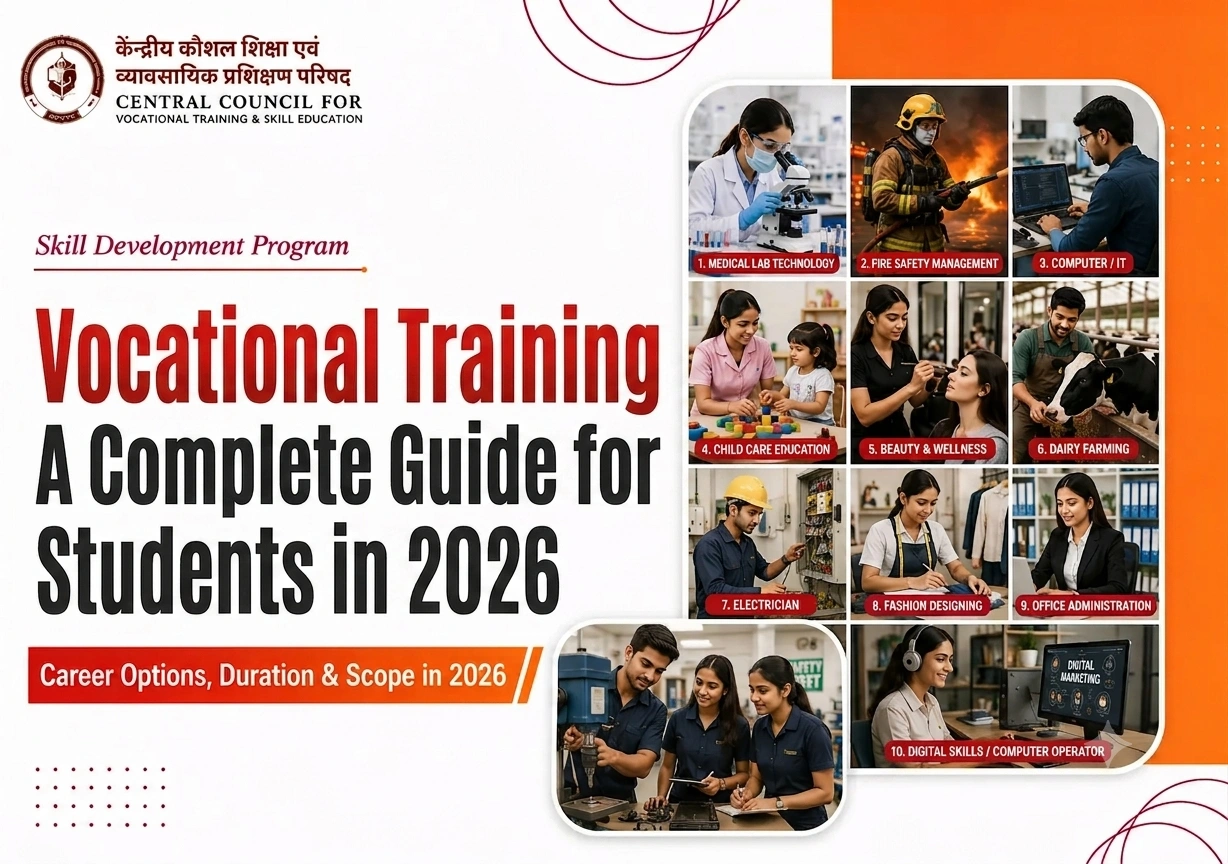
Vocational training, called "व्यावसायिक प्रशिक्षण" in Hindi, is practical, job-focused training that takes six months to two years and costs far less than a degree. It turns 10th or 12th pass students into skilled, employable workers in fields like electrical work, healthcare, fashion, and IT hardware, often with strong self-employment potential. This guide covers course types, fees, salary ranges, state Directorate details, and how to pick the right program. Use it to compare vocational training with traditional degrees and choose a faster, more affordable path to a real career.
If you’re a post-10th or post-12th student trying to figure out whether to take the academic route or choose vocational training, then this guide is for you. The term "vocational training" in Hindi is “व्यावसायिक प्रशिक्षण” (Vyavasayik Prashikshan). It refers to skill-based training for a particular job in a practical framework. Where traditional schooling centers around theory, vocational training for students centers around skills that are in demand in the industry.
The question that students and parents often ask is, "Why should I choose vocational training rather than a traditional degree?” The simple answer is that traditional schooling is lengthy and expensive, whereas vocational training is fast and affordable. Beyond fast-tracked learning, vocational training focuses on real working skills. Thousands of students benefit yearly from the Directorate of Vocational Education and Training, which provides vocational training across multiple fields at the state level.
This guide covers vocational training in 2026 and explains vocational training courses, vocational education options, and different pathways to help you make the right decision. Whether your interest lies in technical, creative, or healthcare fields of vocational training, this guide helps you understand your options clearly.
Read More: Child Care & Education
What Is Vocational Training Meaning in Hindi?
Vocational training's meaning in Hindi is “व्यावसायिक प्रशिक्षण,” which refers to practical skill-based training for a specific job. Unlike the general schooling system, which emphasizes theory and academics, vocational training teaches practical skills that can be directly applied in the workplace.
Consider the facts. A standard degree takes three to four years to complete and costs significant money. By contrast, vocational training takes six months to two years and costs far less to obtain. The objective of all vocational training programs remains the same—to develop you as a skilled, employable worker.
The foundation of vocational education is semantic similarity, which in natural language processing means understanding practical skills and the context where they apply. For vocational training, this means a precise fit between what you learn and what employers need. This strategic alignment makes vocational training highly valuable in today’s job market.
The core elements of vocational training include:
- Hands-on practical learning in workshops and labs
- Real-world problem-solving and project work
- Direct contact with industry trainers
- Internship and apprenticeship opportunities
- Industry-recognized certification upon completion
Who Should Choose Vocational Training for Student Programs?
Vocational training for students works best for those who want to enter the job market quickly and start earning, prefer learning by doing rather than sitting in classrooms, have a passion for a specific trade, come from economically weaker backgrounds and need affordable education, are interested in starting their own business, and enjoy practical work and hands-on challenges.
Many successful professionals today began their careers through vocational training programs. They built real expertise, started earning early, and many even expanded into their own businesses. Vocational training attracts entrepreneurial, career-focused students across India because it combines affordability with immediate earning potential.
Understanding Vocational Training vs. Traditional Degrees
There are significant differences between vocational training courses and traditional degrees. Vocational training takes 6 months to 2 years to complete and costs ₹5,000 to ₹50,000. Traditional degrees take 3 to 4 years and cost ₹1,00,000 to ₹5,00,000 or more.
The focus differs substantially. Traditional degrees emphasize theory and academic knowledge. Vocational training for students emphasizes practical skills and hands-on experience. Because of this, vocational training graduates become career-ready immediately, while degree holders often need additional specialized training before they can work independently.
Vocational training also supports self-employment better than traditional degrees. With practical, job-ready skills, vocational training graduates can easily start their own business. Industry recognition is high for vocational training courses because employers value practical skills. The Directorate of Vocational Education and Training ensures that all vocational training programs maintain consistent quality standards.
Types of Vocational Training Courses Available in India
Across various sectors, many vocational training courses are available. The Directorate of Vocational Education and Training in different states manages most of these programs, offering diverse vocational training options for students with different interests and career goals.
Technical Vocational Training Courses
Technical vocational training includes courses covering machinery, electronics, and manufacturing skills. Popular vocational training courses include electrician training (12-18 months, ₹12,000–₹20,000 starting salary), plumbing (6-12 months, ₹10,000–₹18,000), welding and fabrication (12-18 months, ₹15,000–₹25,000), automotive repair (12-18 months, ₹12,000–₹22,000), and computer hardware and networking (12 months, ₹15,000–₹30,000).
These vocational training courses for students offer excellent self-employment potential. After completing vocational training, an electrician or plumber can easily start their own business, making technical vocational training ideal for entrepreneurs.
Creative Vocational Training Courses
Creative vocational training courses appeal to students with artistic interests. Popular vocational training options include fashion designing (12-18 months), graphic designing (12 months), interior decoration (12 months), photography (6-12 months), and animation and VFX (18-24 months). These creative vocational training courses offer high self-employment potential. Students pursuing vocational training in creative fields often find freelancing and business opportunities even before completing their course.
Read More: Patient Care Management
Healthcare & Wellness Vocational Training Courses
Healthcare vocational training has grown significantly due to increasing health awareness and India’s aging population. Popular vocational training courses include nursing assistant training (12 months, very high demand, growing 15% annually), laboratory technician training (12-18 months, high demand, growing 12% annually), beauty and wellness vocational training (6-12 months, very high demand, growing 20% annually), first aid and CPR certification (3-6 months), and physiotherapy assistant training (12 months).
The Directorate of Vocational Education and Training actively promotes healthcare vocational training courses because of their high employability and consistent growth rates.
Vocational Education vs. Vocational Training: What’s the Difference?
These terms are often confused. Vocational training is focused, practical skill training in a specific trade, typically completed in 6 months to 1 year. Vocational education is broader. It encompasses classroom learning, practical vocational training, internships, and soft skills development needed for a profession. Vocational education usually spans 1 to 2 years.
All vocational training is part of vocational education. However, not all vocational education is purely training. Many vocational education programs combine theory, practical application and personal development together. This comprehensive approach makes vocational education more valuable for long-term career growth than vocational training alone.
Role of the Directorate of Vocational Education and Training
The Directorate of Vocational Education and Training is a government body at the state level responsible for managing vocational training programs. Their primary functions include:
Designing Curriculum: The Directorate ensures vocational training courses stay relevant to the market. Industries change quickly, so the Directorate regularly updates vocational training content based on current industry needs.
Ensuring Quality: The directorate monitors training centers and ensures students receive quality vocational training education.
Providing Certification: The Directorate issues nationally recognized certificates for vocational training course completion.
Job Placement: Many vocational training centers provide direct job placement to students after course completion.
Financial Support: Some states offer scholarships for vocational training to make it more accessible.
The Directorate maintains official websites where you can find information about vocational training courses, fees, training centers, and admission dates. Each state has different portals and processes, so visit your state’s Directorate of Vocational Education and Training website for accurate information.
How to Choose the Right Vocational Training Course
Selecting the right vocational training program depends on your interests, strengths, and local job market. Here’s how to make the best choice:
Step 1: Know Your Interests and Strengths
Think about what work excites you. For technically minded people, choose vocational training in electrical work, mechanics, or automotive repair. For creatively minded people, choose vocational training in fashion design, graphic design, or photography. If you enjoy working with people, choose vocational training in hospitality, healthcare, or communications.
Step 2: Analyze the Job Market in Your Region
Different vocational training courses have varying demand levels in different regions. Metro cities have high demand for IT vocational training, graphic design, and hospitality vocational training. Tier-2 cities need vocational training in electrical work, plumbing, and welding for infrastructure development. Rural areas have demand for agricultural vocational training and automotive repair. Coastal areas need vocational training in hospitality and tour guiding.
Step 3: Research Your State’s Directorate Offerings
Check your state’s Directorate of Vocational Education and Training website. Look for available vocational training courses in your area, fee structure and scholarship information, admission requirements, placement records, and center addresses.
Step 4: Connect with Previous Vocational Training Graduates
Get real feedback about vocational training from people who completed the course. Ask about job opportunities, starting salary, course difficulty, training quality, and how they balanced work with their vocational training.
Step 5: Verify Certification and Recognition
Confirm that your vocational training certificate is recognized nationally and approved by the Directorate. Check if it’s accepted across states and whether international certifications are available for your chosen vocational training.
Benefits of Choosing Vocational Training
Quick Employment: After completing vocational training, you’re ready to work immediately. Unlike traditional graduates waiting for campus placements, vocational training students start working within weeks.
Lower Cost: Vocational training courses cost ₹5,000 to ₹50,000 total. Traditional degrees cost ₹100,000 to ₹1,000,000+. Vocational training makes education affordable for economically weaker students.
Hands-On Learning: Vocational training is 80% practical work. You learn by doing, building real confidence and skill mastery in your chosen field.
Industry Connection: The Directorate of Vocational Education and Training maintains industry partnerships. Many vocational training courses include apprenticeships where you earn while learning.
Self-Employment Ready: Vocational training graduates can start their own business immediately. Electricians, plumbers, tailors, and beauticians can quickly establish independent practices after completing vocational training.
Multiple Learning Options: You can take multiple vocational training courses to develop additional skills and expand your expertise at different career stages.
Recognized Credentials: The Directorate issues certificates that are valued across all states and recognized internationally in many vocational training fields.
Flexible Scheduling: Most vocational training courses offer flexible timing—morning, evening, and weekend batches—to accommodate different schedules.
Common Misconceptions About Vocational Training
Misconception 1: “Vocational training is for students who cannot study."
Truth: Vocational training is a deliberate choice, not a fallback option. Many intelligent students choose vocational training because it aligns with their career goals and interests.
Misconception 2: “Vocational certificates aren’t recognized by employers”
Truth: Certificates from the Directorate of Vocational Education and Training are highly valued. Many employers prefer vocational training graduates over inexperienced degree holders.
Misconception 3: “Vocational training limits me to one job."
Truth: Vocational training provides foundational knowledge for your field. You can work in that field, take additional vocational training courses, or transition to related fields.
Misconception 4: “Vocational training guarantees high salary immediately."
Truth: Your starting salary depends on your employer, location, and skill mastery. However, growth potential is high because skilled workers are always in demand.
Misconception 5: “Vocational training is the end of my education."
Truth: Many vocational training graduates earn degrees later through distance education or part-time programs. Vocational training actually strengthens your foundation for higher education.
Success Stories: Students Who Chose Vocational Training
Raj’s Journey: Electrician to Business Owner
Raj completed electrician vocational training in 18 months and started working at ₹12,000 per month. Today, his electrical contracting business employs 15 people and earns him over ₹200,000 monthly. His vocational training foundation enabled rapid business growth.
Priya’s Success: Fashion Designer
Priya chose fashion designing vocational training while her classmates pursued traditional degrees. Within one year of completing her vocational training, she was designing for local boutiques. Within two years, she opened her own design studio and is now recognized in her city’s fashion industry.
Arjun’s Growth: IT Hardware Specialist
Arjun completed computer hardware vocational training at a starting salary of ₹15,000 monthly. Through consistent learning and specialization, his salary grew to ₹60,000+ monthly within five years. He also runs his own computer repair business on weekends.
Career Progression After Vocational Training
|
|
|
|
|
|
|
|
|
|
|
|
|
|
|
|
|
|
|
|
Note: Salary depends on location, specialization, and individual effort. Metro cities offer 30–40% higher salaries than smaller cities.
Making the Right Choice: Final Advice
Choosing vocational training is choosing the right path for you, not necessarily the prestigious path. Many successful business owners and skilled professionals today started with vocational training. Vocational training is not a lesser choice—it’s a different choice that leads to faster success.
Remember these key points:
- Choose vocational training in a field that genuinely interests you
- Research your state’s Directorate of Vocational Education and Training and verify approved training centers
- Talk to vocational training graduates about their experiences and get honest feedback
- Plan your timeline early and use the Directorate’s official online services
- Learn to balance work with your vocational training course load
- Don’t hesitate to take additional vocational training courses to expand your skills
"Vocational training" meaning in Hindi represents a real opportunity for thousands of students seeking fast placement and career stability. The Directorate of Vocational Education and Training supports this mission by offering quality vocational training courses that respond to market demands. Take your first right step toward a bright, skilled future today!
Published by CCVTE — Central Council of Vocational Training and Skill Education Delhi | +91 8595350621 | info@ccvte.org | ccvte.org


Frequently Asked Questions
Find answers to common questions