- +91 8595350621
- info@ccvte.org
- C4/97B, Keshav Puram, Delhi-110035

Top Career Options After 12th Arts That Lead to High-Paying Jobs
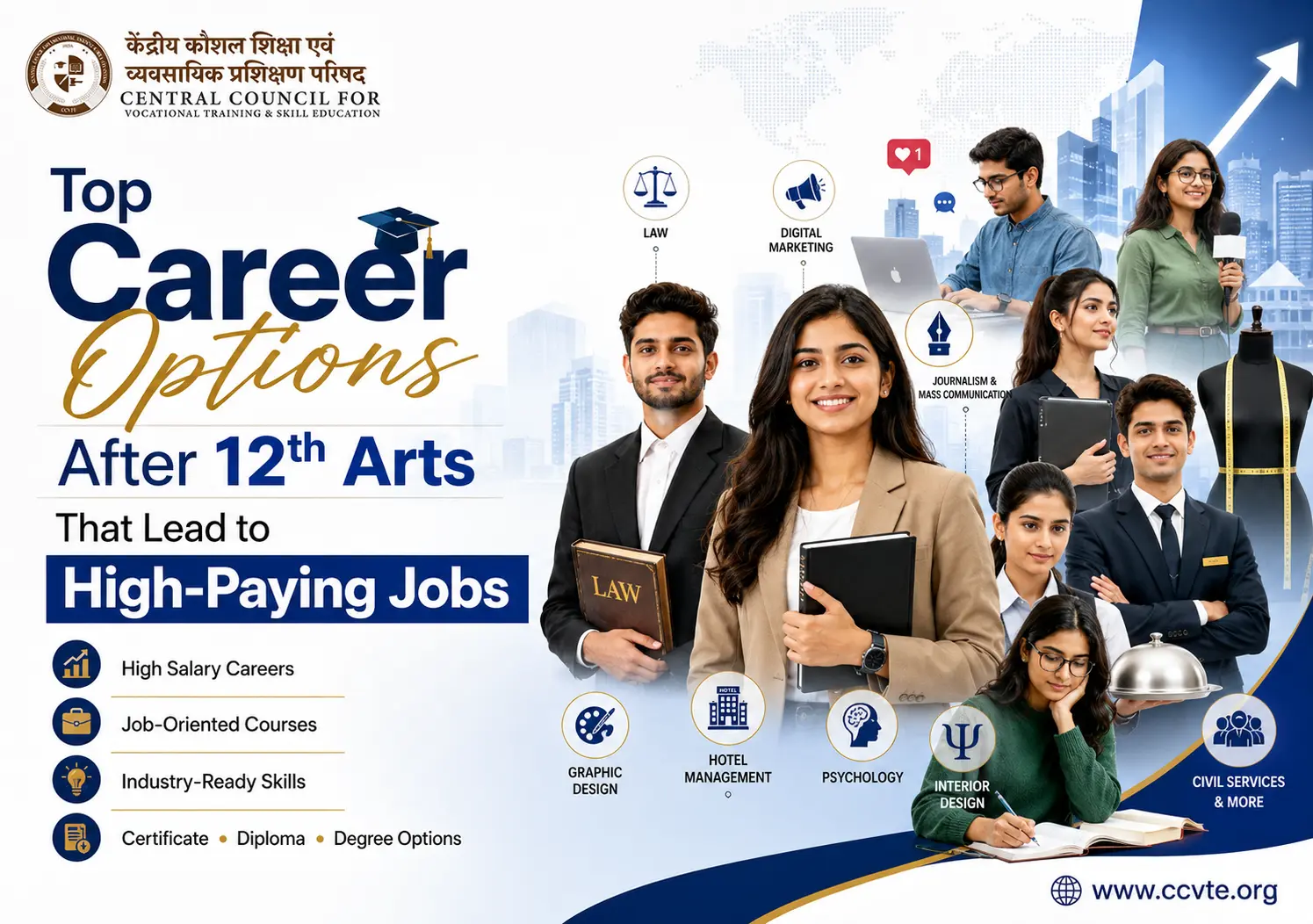
Arts stream students have strong, well-paying career options after 12th — from fashion design to finance. Short-term vocational courses from CCVTE (Central Council of Vocational Training and Skill Education) let students start earning in 3–12 months, skipping the 3–4 year degree route entirely.
Confused about what to do after 12th Arts? You're not alone. Every year, thousands of Arts students face the same question — and too many end up enrolling in a 3-year degree out of habit, not intention.
Here's the truth: the Arts stream opens doors to some of India's fastest-growing industries. Fashion, beauty, hospitality, finance, retail, interior design — these sectors are booming, and they all hire people with the right skills. Not just degrees.
This guide covers the best career paths and job-ready courses available after 12th Arts in 2026. You'll find salary ranges, course comparisons, and a clear decision framework. If you want a fast, practical route to employment, CCVTE's short-term vocational programmes are covered in detail throughout. You can also explore our broader Best Career Options After 12th guide for a full stream-by-stream comparison.
Why Does the Arts Stream Offer Such Diverse Career Opportunities?
Arts stream graduates bring skills that most industries actively look for. Communication, creativity, critical thinking, and people skills — these are not "soft" skills. They are core competencies in high-demand sectors.
Advantages of choosing the Arts stream:
- Strong communication and writing ability
- High emotional intelligence and people skills
- Creative problem-solving across industries
- Adaptable to roles in business, design, wellness, and finance
- Natural fit for customer-facing and client-management roles
Arts students often underestimate how transferable these strengths are. A student with a flair for aesthetics can become a Fashion Designer or Interior Decorator. One with attention to detail and a head for numbers can train as a Chartered Financial Analyst. The stream is not a limitation — it's a launchpad.
What Is the Arts Stream?
Definition Box
The Arts stream (also called Humanities) is one of three main academic streams available after Class 10 in India. Arts stream subjects typically include History, Geography, Political Science, Economics, Sociology, Psychology, and Fine Arts. Arts stream students develop strong analytical, creative, and communication skills, which are valued across industries like design, hospitality, retail, finance, and wellness.
What Are the Best Skill-Based Courses After 12th Arts?
Short-term, skill-based courses are the fastest route from classroom to career. CCVTE offers industry-aligned vocational programmes across six key sectors.
In-body image concept 1: A split image showing a student at a fashion design desk on one side and a student at a hotel front desk on the other, illustrating diverse Arts career paths.
Alt text: Skill-based courses after 12th arts — fashion design and hospitality training
|
|
|
|
|
|
|
|
|
|
|
|
|
|
|
|
|
|
|
|
|
|
|
|
|
|
|
|
|
|
|
|
|
|
|
|
|
|
|
|
|
|
|
|
|
|
|
|
|
|
|
|
|
|
|
|
|
|
|
|
|
|
|
|
|
|
|
|
|
|
|
|
|
|
|
|
|
|
|
|
|
|
|
|
|
|
|
|
|
|
|
|
Note: Course availability and durations should be verified at ccvte.org/all-courses before enrolment.
What Jobs Can Arts Students Get, and What Is the Salary?
Arts stream jobs span a wide salary range depending on the field, skills, and location. Here's a realistic breakdown:
- Fashion Designer — ₹2.5–8 LPA (entry to mid-level)
- Makeup Artist — ₹2–6 LPA; freelancers earn significantly more per project
- Hair Stylist — ₹1.8–5 LPA in salons; more with bridal/event work
- Interior Designer — ₹3–10 LPA depending on firm and city
- Hotel Management Professional — ₹2.5–6 LPA at entry; ₹10+ LPA at senior levels
- Travel Counsellor — ₹2–4.5 LPA; commissions can add significantly
- Retail Manager — ₹2.5–6 LPA in organized retail
- Cosmetologist — ₹2–5 LPA; high earnings in film and fashion markets
- Yoga Instructor — ₹2–6 LPA; corporate wellness roles pay more
- Beauty Therapist — ₹1.8–4.5 LPA in established spas and wellness chains
Starting salaries depend on the city, employer, and quality of training. Students with strong practical skills and placement support — like that offered through CCVTE — tend to command better offers at entry level.
Which High-Salary Courses After 12th Arts Lead to Finance Careers?
Finance is one of the most overlooked options for Arts students — and one of the highest-paying. CCVTE's Business & Finance courses are specifically designed for students who want fast-tracked entry into accounting, investment, and financial advisory roles.
In-body image concept 2: A young Arts student at a laptop, reviewing financial charts and Tally software on screen, in a professional home or office setting.
Alt text: High-salary courses after 12th arts — business and finance vocational training
|
|
|
|
|
|
|
|
|
|
|
|
|
|
|
|
These courses are suitable for Arts students who studied Economics or Commerce electives, or who simply have a strong interest in numbers and financial markets. Tally Prime, in particular, is a skill that every small and medium business in India needs — making it one of the most immediately employable short-term qualifications available.
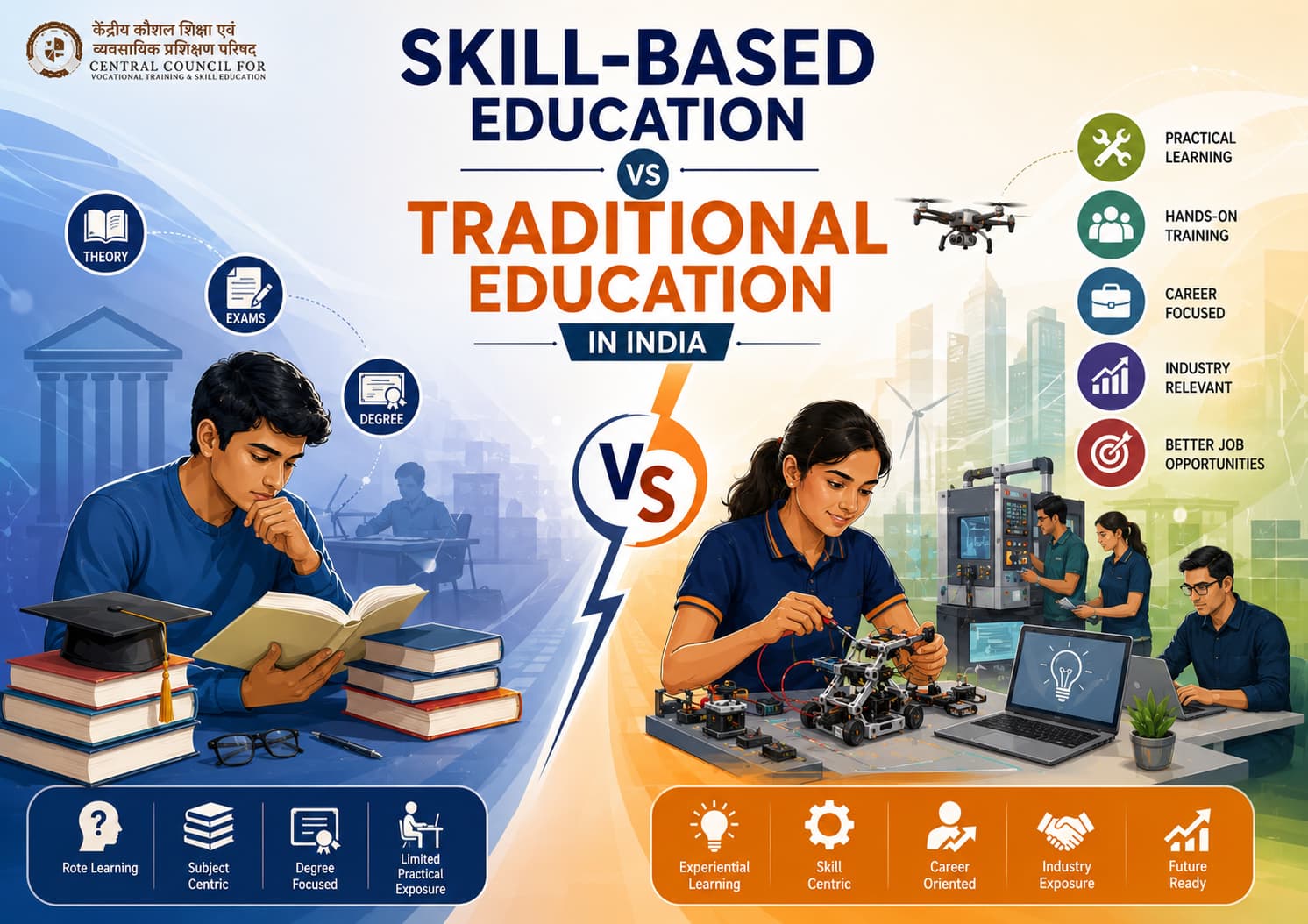
Degree vs Skill-Based Course: Which Should You Choose After 12th Arts?
Both options have real value. The right choice depends on your goals, timeline, and financial situation. Here's a side-by-side comparison to help you decide.
|
|
|
|
|
|
|
|
|
|
|
|
|
|
|
|
|
|
|
|
|
|
|
|
|
|
|
|
Choose a degree if: you want a career in education, law, civil services, or a field where a formal degree is a mandatory entry requirement.
Choose a skill-based vocational course if: your goal is to start working quickly, build a specific trade skill, or enter industries like fashion, beauty, hospitality, retail, or finance where hands-on ability matters more than a degree.
Many students also combine both — starting a vocational course to earn while pursuing a degree part-time.
How to Choose the Right Course After 12th Arts in 5 Steps
Choosing a course can feel overwhelming. This framework makes it simple.
Step 1: Identify your genuine interests
List the activities you enjoy — styling, cooking, designing, meeting people, managing money. Your course should align with what motivates you, not just what sounds impressive.
Step 2: Research industry demand in your city
Hospitality roles are in high demand in metro cities and tourist destinations. Fashion and beauty are strong in Mumbai, Delhi, and Bengaluru. Finance roles exist across all major cities. Choose a field with active hiring in your region.
Step 3: Prioritize hands-on training
Theory alone will not get you placed. Look for courses that include practical labs, live projects, or industry visits. CCVTE vocational courses are built around applied, skill-first learning.
Step 4: Check for placement support
Ask the institution directly: do they assist with job placement after course completion? CCVTE programmes include placement assistance as part of the curriculum.
Step 5: Compare total cost vs expected starting salary
A 3-month course costing ₹15,000–₹30,000 that gets you a ₹2.5 LPA job is a strong return. A 4-year degree costing ₹6+ lakhs for the same role is not. Do the math before enrolling.
Conclusion: Your Arts Degree Is a Starting Point, Not a Ceiling
Arts stream graduates have real, high-growth career paths — in fashion, design, finance, hospitality, wellness, and more. The fastest route to those careers is not always a 3-year degree. CCVTE's short-term vocational courses are built to take you from 12th pass to job-ready in months, with hands-on training and placement support built in.
The question isn't whether Arts students can build strong careers. They absolutely can. The question is: which path gets you there fastest? CCVTE's vocational courses are that path — practical, affordable, and designed to get you earning in months, not years.
Start Your Career with CCVTE — Admissions Open Now
Explore job-ready courses across Fashion & Design, Beauty & Wellness, Hospitality, Finance, Retail, Interior Design, and Yoga.
Call us: +91 8595350621
Available programmes:
- 3 Months
- 6 Months
- 1 Year Diploma
- 2 Year Advance Diploma
Explore All Courses
Contact Admissions
Published by CCVTE — Central Council of Vocational Training and Skill Education Delhi | +91 8595350621 | info@ccvte.org | ccvte.org
Enquiry About Your Course
Recent Posts


Frequently Asked Questions
Find answers to common questions