- +91 8595350621
- info@ccvte.org
- C4/97B, Keshav Puram, Delhi-110035

Beauty Therapist vs Cosmetologist: Salary, Scope & Beautician Course Compared
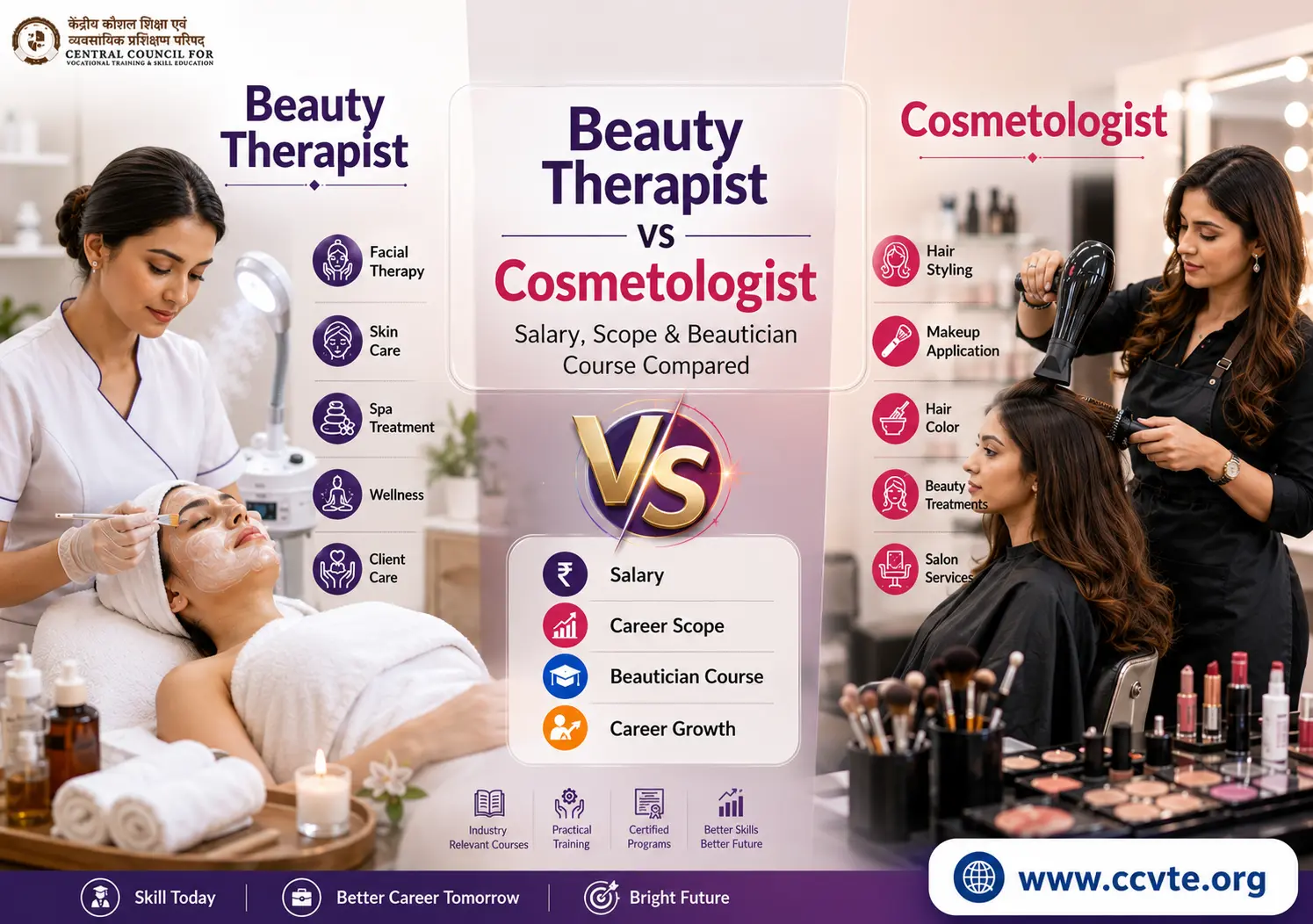
A beauty therapist focuses on skin, body, and relaxation treatments — facials, massages, waxing, and body wraps. A cosmetologist covers a wider field — hair, skin, makeup, and nails together. Cosmetologists usually earn more because they offer more services. In India, a beauty therapist earns roughly ₹15,000–₹35,000 per month, while a cosmetologist earns around ₹20,000–₹50,000 per month (approximate 2026 figures). CCVTE offers both courses in flexible durations of 3 months, 6 months, 1 year, and 2 years, with high school as the entry requirement. Choose beauty therapy if you love skincare and wellness. Choose cosmetology if you want an all-round beauty career with more earning options.
Picking between a beauty therapist and a cosmetologist career confuses many students after their 10th or 12th. Both roles sit inside India's booming beauty and wellness industry. Both promise steady work, good pay, and the chance to run your own salon one day. But they are not the same job, and the wrong choice can cost you time and money.
This guide breaks down the real differences — what each role does, how much each earns, and which course fits your goals. You will find salary tables, course durations, fees, and eligibility rules. We also explain how to become a cosmetologist step by step and list the verified beauty and wellness courses CCVTE offers. By the end, you will know exactly which path suits you and how to enroll.
What is a Beauty Therapist?
A beauty therapist is a trained expert in skin and body care who provides facials, massages, waxing, and body treatments to improve a client's appearance and relaxation. The role centers on wellness as much as looks.
A beauty therapist studies how each treatment affects the skin and body. They learn the ingredients inside the products they use, from cleansing lotions to waxes. This knowledge keeps clients safe and results consistent.
The day-to-day work includes deep-cleansing facials, exfoliation, hair removal, and relaxing body massages. Many beauty therapists also help clients with skin problems by suggesting the right treatment routine. Some train further to specialize as a skin therapist, a lash and brow technician, or a waxing expert.
Beauty therapists work in beauty salons, day spas, wellness centers, dermatology clinics, and luxury hotels. Some choose freelance work, visiting clients at home or handling bridal bookings. An entry-level worker often starts as an assistant beauty therapist, supporting senior staff while building hands-on skills. The role rewards people who enjoy calm, careful, one-on-one client care.
What is a Cosmetologist?
A cosmetologist is a beauty professional trained across hair, skin, makeup, and nails, offering a full range of grooming and styling services. Cosmetology meaning, in simple terms, is the study and practice of complete beauty care.
A cosmetologist handles far more than one area. They cut and color hair, apply professional makeup, care for nails through manicures and pedicures, and perform skincare treatments. This broad skill set makes them useful in almost any beauty setting.
The work needs both technique and creativity. A cosmetologist must follow current trends, master new tools, and keep up with client demands. What does a cosmetologist do on a busy day? They might color a client's hair in the morning, do bridal makeup by afternoon, and finish with a nail session — all in one shift.
Cosmetologists work in salons, spas, skin clinics, hotels, and film or media makeup teams. With experience, many become a master cosmetologist, leading a salon or training junior staff. Others open their own beauty business. The role suits people who like variety and enjoy switching between different beauty skills.
read more: What is Makeup Artistry?
Beauty Therapist vs Cosmetologist — Key Differences
The main difference is focus: a beauty therapist specializes in skin and body wellness, while a cosmetologist works across hair, skin, makeup, and nails. One goes deep in a narrow area; the other goes wide.
Here is a clear side-by-side comparison to help you decide.
|
|
|
|
|
|
|
|
|
|
|
|
|
|
|
|
|
|
|
|
|
|
|
|
|
|
|
|
|
|
|
|
Both careers overlap in skincare and hair removal. The choice comes down to whether you want to master one specialty or offer many services. A beauty therapist can later add cosmetology skills, and a cosmetologist can specialize in therapy — so neither path locks you in forever.
What is the Scope of Beauty Therapy in India?
The scope of beauty therapy in India is growing fast, driven by rising incomes, salon culture, and demand for skincare and wellness services in both cities and small towns. This field offers stable, expanding job opportunities.
India's beauty and wellness market keeps adding new salons, spas, and clinics every year. More people now spend on grooming, self-care, and skin treatments than ever before. This shift creates steady demand for trained beauty and wellness professionals.
A qualified beauty therapist can build several career paths. You can work as a spa therapist, a skincare specialist, or a hair removal expert. You can join a dermatology clinic, a fitness center, or a five-star hotel. Bridal and event work brings extra income during wedding seasons.
Beyond jobs, beauty therapy opens the door to entrepreneurship. Many therapists start home-based studios with low investment, then grow into full salons. Others become trainers, teaching the next generation of students. Corporate wellness programs and mobile beauty services also hire skilled therapists. With the right beauty and wellness course, your options keep multiplying as you gain experience.
Salary Comparison — Beauty Therapist vs Cosmetologist
A cosmetologist generally earns more than a beauty therapist in India because they offer a wider range of paid services. Both roles see salaries rise sharply with experience and specialization.
The table below shows approximate 2026 monthly earnings in India. Actual pay depends on city, employer, and skill level.
|
|
|
|
|
|
|
|
|
|
|
|
|
|
|
|
|
|
|
|
Freelancers and salon owners in both fields can earn far more than salaried staff. A cosmetologist who masters hair coloring or bridal makeup often charges premium rates. A beauty therapist who becomes a trusted skin specialist builds a loyal, repeat client base that pays well over time.
Metro cities like Mumbai, Delhi, and Bengaluru offer higher pay than smaller towns. Extra certifications in advanced skincare, spa therapy, or makeup also push earnings up. In short, your income grows with every new skill you add.
read more: Best Courses After 10th with High Salary
Beautician Course vs Cosmetology Courses — Which Should You Choose?
A beautician course teaches core beauty skills for quick salon work, while cosmetology courses cover the full beauty field for a wider career. Your choice depends on how much time you can invest and how broad you want your skills to be.
Below we compare the two on duration, fees, certification, and eligibility.
How Long Do These Courses Take?
At CCVTE, both the Beauty Therapist course and the Cosmetology course run in flexible durations of 3 months, 6 months, 1 year, and 2 years. You pick the length that fits your goals.
The 3-month option covers the basics — perfect if you want to start working fast. The 6-month track adds more treatments and salon skills. The 1-year and 2-year courses go deep, covering advanced skincare, massage therapy, and salon management. Longer cosmetology course duration also builds specialized skills like advanced hair styling and makeup techniques. Shorter courses get you job-ready sooner; longer ones prepare you for senior roles.
What Are the Course Fees?
Beauty and cosmetology course fees in India typically range from ₹10,000 to ₹80,000 depending on duration and level (approximate figures). Short certificate courses cost less; year-long diploma programs cost more.
A 3-month beautician course usually sits at the lower end of beauty courses fees. A 1-year or 2-year cosmetology program costs more because it covers more skills and practical training. CCVTE keeps its courses affordable compared to traditional full-time degrees, which makes skill training accessible to more students. For exact current fees, check the course pages on the CCVTE website, since figures update over time.
What Certificate Will You Get?
CCVTE awards a recognized skill certificate on completing its Beauty Therapist or Cosmetology course, which you can show to employers or use to start your own salon. A beautician course certificate proves you have the practical training the industry expects.
This certification carries weight when you apply for salon, spa, or clinic jobs. It also builds trust with clients if you go freelance. Employers across the beauty and wellness sector value candidates who complete structured, certified training over self-taught workers.
Who Can Apply After 12th?
The eligibility for CCVTE's Beauty Therapist course is high school completion, so students can join right after their 10th or 12th. These are among the most accessible beauty courses after 12th.
You do not need a science background or high marks. Anyone who finishes school and wants a hands-on career can enroll. This open eligibility makes beauty and cosmetology courses a smart choice for students who prefer skill-based work over long academic degrees.
How to Become a Cosmetologist — Step by Step
To become a cosmetologist in India, complete school, enroll in a certified cosmetology course, gain hands-on practice, earn your certificate, and then start working or specializing. The path is short and practical.
Follow these clear steps:
- Finish high school. Complete your 10th or 12th — the basic eligibility for most cosmetology courses in India, including those at CCVTE.
- Choose the right course. Enroll in a certified cosmetology course. Pick a duration — 3 months for basics or 1–2 years for full mastery — based on your goals.
- Learn the core skills. Study hair cutting and coloring, skincare, makeup artistry, and nail care. CCVTE's syllabus also covers spa therapy and salon management.
- Get hands-on practice. Practical training and internships matter most. Real client work builds the confidence employers look for.
- Earn your certificate. Pass your final assessment to receive a recognized certification you can show to salons and clients.
- Start working or specialize. Join a salon, spa, or clinic. Over time, aim to become a master cosmetologist or open your own business.
Each step builds on the last. The more you practice, the faster you grow. Many students move from fresher to specialist within two to three years by staying consistent and adding new skills.
Related Courses to Consider at CCVTE
CCVTE offers five beauty and wellness courses: Beauty Therapist, Cosmetology, Hair Stylist, Makeup Artist, and Nail Technician. Each one targets a different part of the beauty industry.
Here is your beauty parlour course list from CCVTE, so you can match a course to your interest:
- Beauty Therapist — Best for students who love skincare, facials, massage, and body treatments. This course builds wellness-focused skills for spas and skin clinics.
- Cosmetology — Best for those who want the full package: hair, skin, makeup, and nails. This broad course opens the widest career options.
- Hair Stylist — Best for creative students drawn to cutting, coloring, and styling hair. Hair specialists stay in constant demand across salons.
- Makeup Artist — Best for anyone passionate about bridal, party, or media makeup. This path suits people who want event and film work.
- Nail Technician — Best for detail-loving students who enjoy nail art, manicures, and pedicures. Nail services are a fast-growing niche in Indian salons.
All five courses come in flexible durations and require only high school completion. You can start with one specialty and add more later. Many students combine skills — for example, pairing a Makeup Artist course with cosmetology training — to boost their value and income.
Which One Should You Choose?
Choose beauty therapy if you enjoy skincare and wellness; choose cosmetology if you want a broad beauty career with more services and higher earning potential. Match the path to your personality and goals.
Ask yourself a few simple questions. Do you feel happiest giving relaxing facials and helping clients with skin concerns? Then a beauty therapy course fits you best. You will build deep expertise in one rewarding area and may grow into a trusted skin therapist.
Do you like switching between hair, makeup, nails, and skin? Do you want the most job options and the highest income ceiling? Then cosmetology is your match. Its wide skill set lets you work almost anywhere and adapt to any client need.
Think about time too. If you want to start earning fast, a short 3-month course gets you working sooner. If you want senior roles or your own salon, invest in a 1-year or 2-year program.
There is no wrong choice — both careers grow well in India's expanding beauty and wellness market. The best path is the one that matches what you genuinely enjoy doing every day.
Conclusion
Beauty therapists and cosmetologists both build fulfilling, well-paying careers in India's beauty and wellness industry — the difference lies in focus. A beauty therapist goes deep into skincare, body treatments, and wellness. A cosmetologist goes wide across hair, skin, makeup, and nails. Neither path is better than the other; the right one is the one that matches your interests, your strengths, and the kind of work you want to do every day. If you are clear on your goal, the next step is simple: pick a course, choose a duration, and get certified. CCVTE makes that step straightforward with affordable, flexible courses that require nothing more than a high school certificate to get started.
Both beauty therapy and cosmetology lead to rewarding, well-paid careers in India's fast-growing beauty and wellness industry. The right course turns your interest in beauty into real, job-ready skills — with a recognized CCVTE certificate to back you up.
If skincare, facials, and wellness excite you, enroll in the CCVTE Beauty Therapist course.
If you want the full beauty skill set across hair, skin, makeup, and nails, enroll in the CCVTE Cosmetology course.
Pick your course, choose a duration that fits your goals, and take the first step toward a career you will love. Enroll with CCVTE today.
Published by CCVTE — Central Council of Vocational Training and Skill Education Delhi | +91 8595350621 | info@ccvte.org | ccvte.org


Frequently Asked Questions
Find answers to common questions